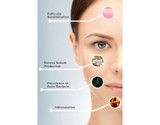
Skin inflammation is implicated as a cause of many common skin complaints. Got an acne breakout? Inflammation plays a role. Prone to redness? Thank inflammation. Seeing an increase in skin hyperpigmentation? You guessed it, inflammation.What is In
…
As if the cold of winter isn’t bad enough, the change in season can also wreak havoc on our skin in the form of dull appearance, rough texture, dryness, redness and itchiness. In its mild state, this combination of characteristics is known as "winter
…
It’s a slippery slope when summer ends and kids go back to school. Before we know it Labor Day and Halloween have slipped by, fall fades to winter and we are deep in the holi-DAZE. Temperatures drop so you crank the heat in your car, house and off
…
Like many estheticians, Tanya Rojas was drawn to the industry after enduring her own skin challenges. It was her discovery of Lexli during esthetics school that helped to transform her skin and is helping her bring undeniable improvement to the sk
…
Getting to see the before and after images of customers who addressed specific skin concerns using Lexli products is the best part of our job and the transformation we are bringing to you today is one of the best ones yet.
Meet Selena.
We rece
…
Your teenage years may be in the rearview mirror but you suddenly find yourself increasingly experiencing breakouts, especially on the lower part of your face.
Sound familiar?
You're hardly alone.
More than 45%
…
For decades, Americans have been warned of the risk of skin cancer caused by exposure to the sun's UV rays and simultaneously encouraged to make sunscreen use a daily habit. Despite advisories from physicians, however, most Americans do not regularly
…
Transepidermal water loss, or TEWL, is an essential concept when considering skin dryness. Although often overlooked, TEWL is one of the main reasons why moisturizing the skin regularly - and with the right products - is a crucial step in kee
…
Nutrition. Whether you love or loathe the topic, the reality is that what you eat (and what you don’t) affects your skin in different ways. While genetics and skin care habits play key roles in the health of your skin, good nutrition is also vital
…
For many people, achieving and maintaining the perfect
sun-kissed glow, year-round, is an important part of feeling their best. However, the dangers associated with
ultraviolet exposure from the sun and other artificial sources have more and
mo
…
Waking up to a blemish on your face can ruin your entire day.
We’ve all been there. And haven’t we tried everything from popping and
squeezing to masking the zit with extra thick concealer? Or we’ve been willing
to attempt any home remedy out o
…
The
pressure to have the perfect #shelfie on Instagram is real, but are all of
those products necessary in our day to day skin care routine? Our skin care regimen
should be customized to our skin’s unique personality and needs, so how do we
kn
…
Vitamin D is essential to the body and most recognized for its important role in bone growth and even mood regulation. But did you know that vitamin D is also important to your skin? Read on to learn about vitamin D’s skin benefits and how to get mor
…
If you're reading this post, it's likely you can identify the characteristic appearance of crepey skin. Large areas of skin that were once smooth and taut, now appear paper thin, loose and wrinkled. And the name? It's derived from the fact that th
…
May is Skin Cancer Awareness month, a time during which we tend to have a heightened awareness of the importance of conducting regular skin checks. But as time goes on and we reach the autumn, most of us tend to grow less conscious of this ritual.
…
Understanding the root cause of wrinkles and other signs of aging is an important first step before working to minimize them. Why? Because most of the signs of aging on our skin are caused by "extrinsic" or external factors, including unprotected
…
We’re excited to bring to you another installment in Lexli’s series of interviews with leaders within the field of esthetics. If you’ve been following, you know that the “Esthetician Talk” series asks outstanding professionals for their thoughts o
…
Lexli’s
“Esthetician Talk” series features interviews with standout estheticians to
learn about their take on industry trends, their favorite treatments, advice
for those entering the esthetic field and more. Packed with great skin care
advice
…
Lexli continues its series of interviews with leaders within the field of esthetics to get their take on industry trends, learn their top skin care recommendations, hear their tips for those just beginning their career as an esthetician, and more.
…
If you're over age 40 and spend time outdoors, you may have noticed the appearance of small white dots on your skin. These spots are typically more noticeable during warm weather months when the contrast is greater between them and the surrounding sk
…
It's common knowledge that pregnancy brings with it drastic changes to your body, but women are often surprised to learn just how big of an impact pregnancy can can have on their skin. After all, a whopping 90% of women are estimated to experience "s
…
As women, we're often surprised to find that, just as we reach an age where anti-aging skin care products begin taking on greater importance in our routine, acne begins rearing its ugly head. If you count yourself among those dealing with acne in
…
We hope you’ve been enjoying Lexli’s series of interviews with standout estheticians. Called “Esthetician Talk,” this regular feature provides insights into the various specializations in esthetics today and offers expert opinions on industry tren
…
If you've already optimized your skin care routine but are eager to achieve faster results, you may be wondering if there's something more you can be doing for your skin. While we always recommend setting up an appointment with a licensed esthetic
…
May is Skin Cancer Awareness month, which serves as a time to remind ourselves of the necessary precautions we should be taking to protect our skin year-round, but especially as the sunnier days of summer approach. After all, as the Skin Cancer Found
…
We’re back continuing
our series of skin care expert interviews. Here, we profile leaders within the
field of esthetics and chat with them about industry trends, top skin care
recommendations, and advice for new estheticians. Whether you’re a p
…
If you've experienced acne outbreaks (and who hasn't?!) you know that not all blemishes are created equal. There's your run-of-the-mill pimples - whiteheads (also called "closed comedones" because they are closed off from outside air) and blackheads
…
We're guessing there is a good chance you've heard vitamin C recommended as a must-have ingredient in your skin care routine. Throughout the past five years, vitamin C has held skin care "ingredient du jour" status in women's magazines and among m
…
Spring has arrived, bringing with it warmer weather, longer days and, of course, the desire to do a little spring cleaning. While you're busy cleaning out closets, consider breezing through the cabinet where you keep your skin care products. Not o
…
Lexli is back with its series of expert interviews. Here, we profile leaders within the esthetics industry and ask them for their take on trends, skin care recommendations, and advice for new estheticians. Whether you’re a professional in the fiel
…
Chapped lips are the skin concern that packs a double punch: not only do they bring discomfort in the form of burning and tightness, they are also hard to hide, aesthetically-speaking. Cover chapped lips with lipstick and you'll find its character
…
Today, Lexli is back continuing its series of interviews. Here, we profile leaders within the field of esthetics to gain their insights on industry trends, top skin care recommendations, and advice for new estheticians. Whether you’re a profession
…
This week we introduce you to Maria, a Lexli customer who started using the line in March of 2020.Like so many of us, Maria reached her late 20s expecting her skin to outgrow some of the nuisances of her youth (think breakouts) while enjoying a fe
…
Lexli is back with another interview in its series that profiles leaders within the field of esthetics. These discussions ask professionals for their take on industry trends, top skin care recommendations, and advice for new estheticians. Whether
…
Dullness is one of those skin issues that slowly creeps up on you. You may not notice it on yourself until you’re admiring your teenager’s dewy complexion, look in the mirror and realize your skin looks flat and overall “blah.” The next thing you kno
…
While makeup is a valuable tool in hiding skin imperfections like hyperpigmentation, scars or dark undereye circles, it unfortunately isn’t much help in disguising rough skin texture, which has a tendency to become more noticeable the more we try to
…
Today, we continue our series of interviews with esthetic leaders in order to gain their insights about industry trends, top skin care recommendations, and advice for new estheticians. Whether you’re a professional in the field or a skin care enth
…
The arrival of late fall and winter often brings with it the onset of skin “blahs.” Colder temperatures and reduced humidity throughout much of the country causes our skin - head to toe - to lose moisture at a faster rate, leaving it looking dull
…
Lexli’s Esthetician Talk series of interviews continues as we profile leaders within the field of esthetics. Through these discussions we’ve highlighted experts’ take on industry trends, learned about their top recommended treatments, heard their
…
Many of us consider getting a facial the height of relaxation, an occasional indulgence used to treat ourselves. And while facials are certainly intended to bring calm and reduce stress, they really stand out for the improvement they bring to the ski
…
Lexli continues its series of interviews with leaders within the field of esthetics to get their thoughts on key industry trends, hear about their favorite treatments, discover their advice for those just entering the field, and more. The intervie
…
We’re back today with another interview in our series that profiles leaders within the field of aesthetics. As you’ve seen, these discussions ask professionals for their take on industry trends, their top skin care recommendations and their advice fo
…
Lexli continues its series of interviews with leaders within the field of esthetics to get their take on industry trends, learn about their favorite treatments, hear their tips for those just beginning their esthetics career, and more. Whether you
…
As face masks have become part of our regular wardrobe, so too have breakouts become a fact of life during the pandemic. In fact, acne breakouts attributed to mask-wearing have become so common that a term has even been coined to describe it: “mask
…
Lexli continues its series of interviews with leaders within the field of aesthetics to get their take on industry trends, learn their top skin care recommendations, hear their tips for those just beginning their aesthetics career, and more. Wheth
…
Everyone has oil in their skin, some just have more than others. Not only does this oil, called sebum, help to keep skin hydrated and protected, it also aids in skin suppleness. If you notice a concentrated shine on your nose, forehead, and chin, you
…
Unfortunately, your face isn’t the only place where acne can occur. Pores can get clogged nearly anywhere on your body, including your back, which can lead to breakouts that are referred to as “bacne.” The good news is, just like blemishes on your
…
Brides often feel they have a laundry list of skin concerns to tackle before walking down the aisle. We want our skin to be clear, hydrated, smooth, and prepped for the special day, ensuring it illuminates before, during, and after saying “I do.” Ach
…
Skin care advice is everywhere. It’s hard to escape the endless flow of “do this” and “don’t do that” skin care guidance we find online, in magazines, from advertisements or from well-meaning friends. With sometimes contradicting information, we o
…
Lexli continues its series of interviews with leaders within the field of esthetics to get their take on industry trends, learn their top skincare recommendations, hear their tips for those just beginning their career as an esthetician, and more.
…
You know what they say, the best things in life don’t come free. Curating your own multi-step skincare routine can be a daunting task, especially when you watch the costs start racking up. The temptation to fill your medicine cabinet with the late
…
Our skincare routines are sacred. It’s okay to admit it! If your favorite part of the day is running through your skin are regimen every morning and evening, you’re in good company. Creating a skin are routine with products and steps that make sen
…
We're excited to share with you today a guest post from Emily Polner who blogs at No Repeats or Hesitations, where she offers fashion and beauty tips. We asked Emily to share with us the best skincare advice she ever received. Take a look at
…
We’re continuing our monthly series of interviews with leaders within the field of esthetics to get their take on industry trends, learn their top skin care recommendations, hear their tips for those just beginning their career as an esthetician,
…
It’s all over the news and social media - Coronavirus has arrived in the US. The spread of this new strain of the coronavirus has raised public attention to the importance of hand washing and the use of hand sanitizer to avoid illness. Unfortunate
…
Have you ever stared at the label of a skin care product that boasted anti-aging effects and wondered just when you need to start incorporating products like it into your routine? While teenagers certainly have time before they need to begin thinking
…
We're excited today to have a guest post from Francesca Gariano, a freelance journalist who blogs at Life According to Francesca. You may be familiar with her from a Q&A we did with her a few years ago, during which we discussed her
…
New this month, we’re beginning a series of interviews
with leaders within the field of esthetics to get their take on industry
trends, learn their top skincare recommendations, hear their tips for those
just beginning their career as an esthet
…
"Self care is never
a selfish act – it is simply good stewardship of the only gift I have, the gift
I was put on earth to offer to others.”
-Parker J. Palmer
With just a few days until Valentine’s Day, we’re constantly
being remind
…
Sugar addiction is out of control in America. According to the American Heart Association, the average American adult consumes approximately 77 grams of sugar each day, a number more than three times the recommended maximum of 25 grams for women. And
…
For many of us, the start of a new year comes with resolutions to improve our health and wellbeing. While exercising more, saving money and eating more healthy top the list of
resolutions made for 2020, goals of improving skin health deserve a
…
Much like our wardrobe, your skincare routine should change along with the seasons. With the drop in
temperatures and humidity,
our skin can suffer when winter arrives, which means that having a solid winter skincare routine is vital.
Luckily
…
Taking a relaxing vacation is all fun and games until you break away from your skincare routine and expose yourself to a new environment, a combination that may have your skin looking and feeling out of sorts. While our skincare routines can be a
…
Lexli is excited to be making its first appearance in a
How to Be a
Redhead subscription box
next month. Featuring 100%
redhead-friendly products, the box – and the website that started it all – are
the brainchildren of sisters Adrienne a
…
With back-to-school season underway, you've likely been working to ensure that your child has everything he or she needs to be prepared for a great year. But while you've been thinking about school supplies and new clothes, have you considered the
…
Over the last several years, the do-it-yourself skincare
trend has gained some interest. With ingredients
easily found in a grocery store and a little extra work, people are mixing up
their own formulations for a DIY skincare routine or as a r
…
When you get serious about taking care of your skin, the last thing you want to do is stymie the improvement you've achieved. That's seemingly why so many people ask us about the impact of makeup on their skin. Many of us apply makeup nearly as of
…
The Lexli team met Jenn Burklow several months ago after she
did an Instagram story about her experience with the
Lexli Acne Kit. In it, she
talked about the incredible improvement her skin had undergone since she began
using the Kit. W
…
Alex struggled with stubborn acne for years and while he
would occasionally find a product that would help to clear his skin for a few
weeks, the acne always returned, leaving scarring in its wake. After years of
bouncing among acne products th
…
They say that the eyes are the windows to the soul. However,
insight into your thoughts or feelings may not be the only thing your eyes are
giving away. Some of the first signs of aging appear around the eyes. Years of
facial expressions, laugh
…
Likely the best-known face and body scrub on the market, St. Ives Apricot Scrub, has been used for decades by those hoping to reduce breakouts, slough off dead skin or to just get that after-scrub glow. St. Ives uses "100% natural walnut shell pow
…
Tell us about your business:
Located in South Windsor, CT, Body Secrets was founded 20 years ago by Sandra Daiello (pictured, middle) as a premier beauty destination and a retreat for those who wish to relax, slow down and re-connect with themse
…
When it comes to caring for your skin, we know that a good
skincare regimen and a well-balanced diet rich in nutrient-dense foods like fruits, vegetables,
healthy fats and proteins are necessary for optimal skin function. Properly
functi
…
We're excited to begin a new series on the Lexli blog that profiles some of the salons, spas, licensed estheticians and physicians who retail the Lexli line. To kick it off, we're introducing you to
Josef's, an organization with which Lexli has
…
Teresa has long struggled with skin that is sensitive and
prone to dryness – so much so that she has stuck to very basic skin care
products that contain only a few simple ingredients. The dryness became so
extreme that she immediately needed to
…
It’s a simple fact that skin that is healthy naturally looks
younger. Regardless of the condition that your skin is in today, cultivating
positive habits and maybe even breaking some old ones will do wonders for your
complexion. Wondering how t
…
Skip ahead to Eric's 1 Year Update
Eric’s path to clear, healthier skin began in a bookstore.
As someone with stubborn, acne-prone skin, he struggled with
breakouts on-and-off for more than 10 years. As Eric explains it, “My acne is
…
For years we've heard that drinking at least eight, 8 ounce glasses of water each day is important to our health. And while water consumption is indeed essential to proper digestion and kidney function, regulation of body temperature and even join
…
For years, skin care consumers have been hearing warning bells about the dangers of parabens. And while there is a growing list of skin care and cosmetic brands that tout their "paraben-free" status, parabens still appear in an estimated 85% of cosme
…
Not so long ago, Lyla’s skin care routine involved just washing
her face in the shower with bar soap and using her body lotion as a face
moisturizer. Most days, her skin felt tight and dry. She had uneven skin tone and
fine lines were beginning
…
It doesn’t get much softer or smoother than freshly shaved
skin, but keeping that smooth texture can be a challenge. If you’ve ever had an
itchy red rash, small red uncomfortable bumps, or perhaps swelling or stinging
that show up in the areas
…
Visit a drugstore or department store and it's clear that, as consumers, we have a dizzying number of skin care products at our disposal today. From serums to toners, exfoliators to moisturizers, they all seem like necessary additions to our skin
…
Acne's reputation for being hard to treat is well earned. After all, when you consider the numerous factors that can influence when and why acne develops, its severity and how well it responds to treatment, it's easy to see why some individuals ha
…
When cold weather strikes it can take its toll on our skin –
and the first area to show the effects of winter weather is often our hands. Coping
with the effects of dry skin is not only uncomfortable but when it’s at its
worst, it can be downri
…
If, as a child, your upper arms were constantly marked by tiny, pimple-like white or red bumps that resembled goosebumps, you weren't alone. Called keratosis pilaris, this inherited but harmless skin disorder is estimated to affect 50% of adolesce
…
Sooner or later it happens to all of us. That once youthful
skin - plump, wrinkle-free and glowing – suddenly appears thinner, duller and
more wrinkled. Decreasing levels of collagen, an essential protein that keeps
our skin supple, plump and y
…
Skin care products categorized as "toners" have been around for a long time. For many of us, the term may bring back teenage memories of applying harsh astringents to our face to help clear acne. While we may have thought that the burning feeling
…
It’s common to see the words “pH-balanced” on the packaging
for personal care and skin care products. But do you know how pH applies to the
products you use on your skin? More importantly, should you even care? We believe
you should – and here’
…
If you look into the average American woman’s bathroom
cabinet, you’re likely to find a plethora of skin care products bought at
various points over the past five years. For many of us, it’s hard to say
goodbye to a product we think we
might
…
Anyone who has struggled with acne can relate to the ups and downs that accompany the process of trying to achieve clear skin. In fact, the one thing that nearly every acne success story we share on this blog has in common is the use of aggressive
…
For skin that looks and feels its very best, its hard to beat the benefits of a regular
professional facial using properly-formulated products. Despite that, countless Lexli customers have achieved optimal skin health and a glowing complexion b
…
With the height of the holiday social season just weeks away, chances are
you've already spent time picking out the perfect outfit and even perusing holiday makeup looks on Pinterest. But to look your very best, don't forget about the importance o
…
Serums, eye creams, moisturizers, sunscreens . . . if you're like many people who take skin care seriously, you know that each of these products are important but aren't completely sure of the correct order to apply skin care products. Perhaps you
…
If you ask Margo to describe how she typically felt about
her skin before discovering Lexli, she would tell you that it was “just okay.”
She doesn’t have any skin conditions. Her skin type is normal. And while she
noticed her slightly uneven sk
…
Whether you have good intentions
of starting up a skincare program, you employ a simple routine of daily
washing and moisturizing or you have an advanced skincare regimen that targets
all of your skin concerns, most of us are just trying to do
…
We know what you're thinking . . . it's only October. But throughout much of the country, temperatures have turned colder and humidity is on the descent, making now the perfect time to switch out your moisturizer to ensure your skin is hydrated an
…
Hyperpigmentation is not at all uncommon, but that doesn't make the condition any less frustrating. These areas of darkened skin pigment are often referred to as "age spots" or "liver spots" when they appear on aging skin and "sun spots" when they
…
It's common for those who struggle with acne to evaluate their lifestyle in the hopes of finding
something they're doing that is causing their acne. In fact, we regularly get questions via the Lexli Facebook page asking "What foods cause acne?"
…
Skip ahead to Francesca's 2 Year Update
Struggling with acne is nothing new to Francesca Gariano.
This 22-year-old
beauty blogger has
been battling persistent hormonal acne since she was 13 years old. By her own
account, Francesca has trie
…
Included with every Acne Kit order is a product insert that
encourages customers to take a “before” photo of their skin prior to beginning
the Lexli clarifying regimen and another after 30 days of consistent use. Doing so
helps them to appr
…
Recently,
twenty-five-year old Julia Perkins reached out to us to share her skin transformation
story. The skin issues she struggled with are familiar to many of us. For that
reason, we were excited to learn more about Julia’s experience and ho
…
Marie Morisset is a self-professed skincare fanatic who, after years of testing countless skincare products from a wide range of companies, has a solid idea of what works and what doesn't for her skin. Marie showcases her product finds on her
…
If you characterize your skin as “sensitive,” you aren’t alone. Today, an estimated 51% of women and 36% of men in the United States
perceive their skin as such, and that number appears to be on the rise.
Consider this: with one simple modifica
…
One of the most popular questions we receive on the topic of acne is "what causes it?" The question makes sense. If you understand the cause of something you can more effectively address it. But in the case of acne, there often isn't just one caus
…
We've written a lot on the topic of exfoliation here on the Lexli blog and in aesthetic industry publications (read
The Case for Exfoliation at Dermascope). And while we're pretty sure that those of you who follow the blog understand the "
…
Makeup and skincare: a match made in beauty heaven. After all, even the most expertly applied makeup look appears less-than-perfect when the skin beneath it isn't in great shape. While a consistent skincare routine appropriate for your skin type is
…
Rosacea can come on suddenly. After years of having clear and manageable
skin, you may begin experiencing flare-ups of redness and flushing. Soon, it
happens more and more, with visible blood vessels starting to appear. As time
passes, the redne
…
When selecting skincare products, most of us take into account many factors, such as price, active ingredients featured in the formulation, the product’s fragrance and texture, and more. What we often overlook, however, is an examination
…
If you are one of the 7.5 million Americans who suffer from psoriasis, then you know that this
autoimmune condition can be unpredictable. Commonly active in areas like
elbows, knees and shins, scalp and lower back, psoriasis appears in the form o
…
Up-and-coming
Nashville singer/songwriter, Madison Lawrence, knows a thing or two about skincare.
While she’s
best known for stunning vocals that shine on songs like “Yours” and “Lies” -
her latest single, Madison is also an Internet celebrity
…
As a forty-something working mother of two teenage boys,
Margaret may have very little time for herself but she has always taken the
time to make skincare a priority. That’s because, like many, Margaret has
encountered an array of skin issues h
…
Today’s skincare products have an incredible ability to
improve the health and aesthetics of your skin thanks to advances in ingredient
research and development. And while serums and creams formulated with peptides,
green tea, hyaluronic acid a
…
New Year, New You.
How many times have
you set this unrealistic expectation for yourself? How many times have you planned to make major
changes in your daily routine to get skinnier, healthier, richer, and happier
only to fail after a
…
It may be tossed aside as a stereotype but the teenage years
truly can be a time of angst for a lot of 13- to 18-year-olds as they navigate academic
demands, social pressures, extra-curricular activities, and
the uncertainty of future plans. As
…
Some men might
consider a good “skin care routine” one that includes the suds that run down their
face when rinsing after a shampoo. But for others, their skin care routine
mirrors that of the most skin care-conscientious woman. More and more m
…
We humans spend nearly a third of our lives sleeping – or at
least we should. Despite the guidance to get at least seven hours of sleep each
night, many Americans are sleep deprived; the CDC suggests that 1 in 3 adults
regularly get too little
…
One size does not fit all when it comes to taking care of
your skin with each stage of life. As you age, your skin changes. In fact, it can run the gamut from acne prone in your early 20s to drier and more sensitive
in your 40s and beyond! And b
…
It’s the holiday season and December will have come and gone before we know it. While we are in the midst of holiday parties and gatherings, school functions, work, decorating the tree and more, finding the time to put ourselves together to attend
…
When you
think about beautiful and healthy skin, a clear, smooth complexion comes to mind. And for most of us, that definition does not include looking in the mirror
and seeing noticeable pores. We wonder if it’s possible to do something to make
…
Acne is the most common skin ailment treated by
physicians. While an estimated 40-50 million adolescents and young adults are
affected by it, many individuals’ first experience with acne doesn’t occur
until middle age. Regardless of the stage in
…
Battling a skin condition like eczema can be challenging and
frustrating—to say the least. With uncomfortable symptoms and sporadic flare-ups
that commonly show on visible places like face, hands, and feet, it’s likely
that someone who suffers
…
One
of the hardest things to teach new estheticians is how to educate guests on
home care. I know because I’ve spent the last few years as an esthetics
educator doing exactly that!
As an esthetician, I have an inherent interest in
pr
…
While most of us can relate to the feeling of anxiety that comes with having skin issues on a big day, few of us can understand it quite to the same degree as Kathryn Lewek. The reason? She’s an opera star.
Skip ahead to Kathryn's 3 Year Update
…
A topic that doesn't get quite the level of attention it deserves is that of proper skin care while undergoing radiation, chemotherapy, and other cancer treatments. The intensity of these types of therapy causes damage to skin cells and, for many
…
Most of us look at the skin’s natural process of aging with a hint of dread as fine lines and wrinkles begin to appear, perhaps we notice sagging in areas of our face that used to be taut, or areas of darkened pigmentation appear. In response, we
…
For those struggling to get acne under control, professional
treatments offered by licensed estheticians can be beneficial. Among these are
acne facials or deep cleansing facials, which work to exfoliate the skin,
minimize blockages in the pore
…
There's no shame in reaching the point where you dream of turning back the hands of time to recapture the skin of your youth. As the
effects of age or sun damage become apparent in the form of fine lines, crow’s
feet, sagging lids, age
…
Among the skin care ingredients we highly recommend for those seeking anti-aging benefits are peptides. Whether you're familiar with the use of peptides for skin or are just learning about these potent active ingredients, understanding what to exp
…
We’ve all been there: you wake up the morning of a big
event, look in the mirror and see it - an unsightly blemish on a most obvious
area of your face. While the urge to start picking at your skin is great, here
is where willpower must kick in.
…
Two popular ingredients commonly found in skin care products
are alpha-hydroxy acids (AHAs) and beta-hydroxy acid (BHA). You’ve
likely heard of them and know they’re important, but do you know the
difference? If you’re like most individuals, yo
…
Summer typically has us giving more thought to sun protection. The topic is an important one, not only because of the dangerous potential for skin cancer, but also because of the visible damage that sun can do to our skin. In fact, experts bel
…
Our eyes are most often the first area on our face to begin showing the signs of aging. Given that they're also the focal point of our face, we have an incentive to keep them looking as youthful and vibrant as possible. The good news is that tired
…
Face washing. Of all the skin care steps, this is the one that most individuals find the easiest to understand and the simplest to implement. And yet, despite its simplicity - or, perhaps, because of it - it's the step that so many of us are doing
…
Spring Break getaways are on the horizon so we asked Stacey Stark, director of marketing at Lexli, to share her list of travel skincare essentials. Read on for some great recommendations.
Those of us preparing to get away for spring break could
…
Earlier this week, we announced the launch of Lexli's newest product: A-Firm-Ative Anti-Aging Peptide Serum. A labor of love that has been under development by Dr. Abdullah's team for more than a year, A-Firm-Ative combines Lexli's signa
…
At Lexli, we use organic, pharmaceutical-grade aloe as the main ingredient in each of our skin care products. Aloe has a history of treating a variety of ailments and contains hundred of components that promote skin health and improve aesthetics.
…
Ask a friend what they love most about their favorite skin care product and you'll hear everything
from “it feels great on my skin” and “I love the smell” to “It helps to
minimize fine lines” and “my skin looks better when I use it.” These answe
…
For nearly two years now, numerous beauty editors and bloggers have promoted Korean skin care routines as the ultimate solution to achieve plump, dewy, youthful-looking skin. A simple Google search will show you just how much hype surrounds these
…
The term "antioxidants" has become a health and wellness buzz word in recent years. Physicians and nutritionists alike regularly encourage individuals to eat foods rich in them, while consumer products regularly tout them on product labels. In fac
…