
gray drop - Professional Login Professional Login gray drop - Customer Login Customer Login gray drop - New to Lexli? New to Lexli?
all natural skin care products


Aloe Education


Aloe History and Findings


There’s no question that aloe vera has been used by numerous civilizations around the world for countless centuries. In fact, records of its restorative powers appear in Sumarian clay tablets dating back to 2100 BC. Even Cleopatra is said to have regarded aloe as her “beauty secret.” It’s now known that ancient civilizations used it to treat a variety of ailments ranging from sinus pain and burns, to wounds and infections.


Prior to embarking on his quest for world domination, Alexander the Great sought counsel by famed Greek physician and philosopher Aristotle, who advised him to be sure to conquer the Isle of Socotra (modern day Yemen). His rationale was simple – this Indian Ocean island was rich in aloe vera. Calling it the “potted physician,” Aristotle instructed Alexander to carry aloe plants into battle to help his troops heal from their injuries. And, indeed, aloe is beneficial even today on the battlefield. Researchers from the University of Pittsburgh published a study in 2004 that showed juice of the aloe plant could keep war casualties or other trauma victims alive until they can get a blood transfusion1.

While aloe originated in northern Africa, it was cultivated and brought to many other parts of the world. In fact, when the New World was discovered, the Spanish brought aloe plants with them. Today, the plant is cultivated primarily in the Caribbean and southern Africa. In the United States, aloe is grown throughout Florida, southern California and the Rio Grande Valley of South Texas. Although more than 300 species of aloe are grown throughout the world, only two are grown commercially. These include Aloe Barbadensis Miller and Aloe Aborescense.


  1. Macias CA, Kameneva MV, Tenhunen JJ, Puyana JC, Fink, MP (2004) Survival in A Rat Model of Lethal Hemorrhagic Shock Is Prolonged Following Resuscitation With A Small Volume of A Solution Containing A Drag-Reducing Polymer Derived From Aloe Vera. Shock 22 (2) 151-156


backtotop


Modern Scientific Findings Regarding Aloe


Aloe first became included in the United States Pharmacopoeia in 1820 and, since then, countless scientists have studied its efficacy in a range of clinical applications. The first scientific research surrounding aloe dates back to 1935 when Collins and Collins discovered aloe vera to be beneficial in the treatment of radio-dermatitis, a disease caused by exposure to ionizing radiation. Since that time, studies have proven aloe’s effectiveness in a wide range of conditions, including superficial skin abrasions, frostbite, asthma, psoriasis, burns, periodontal disease, radiation ulcers, peptic ulcers, herpes and even diabetes. In fact, as a recognized aloe researcher, Dr. Abdullah has personally led research studies that demonstrated aloe’s abilities in wound healing1 and in the treatment of specific diabetic conditions2. Each day, new discoveries surrounding aloe’s healing abilities occur.

Key discoveries surrounding the healing benefits of aloe include, but are not limited to:

1936 –

C.S. Wright describes the use of aloe in the treatment of radiation ulcers.

1940 – T. Rowe and associates note that aloe helps heal burns faster than any other treatment available at the time.
1945 – V.P. Filatov, a researcher from Russia, reports effective treatment of skin conditions caused by parasites.
1953 – C.C. Lushbaugh shows further evidence of greatly improved wound healing in radiation dermatitis and ulcers when treated with aloe.
1956 – K. Somova in Russia and 1969 – E. Zimmerman in the United States separately show benefits of aloe in the treatment of periodontal disease.
1963 – Blitz and Smith use aloe for the treatment of 18 patients with peptic ulcer disease, with 17 of 18 patients recovering from symptoms.
1980 – Wolfe demonstrates that aloe is highly effective against various microorganisms including Staph, Strep, and Candida.
1982 – Heggers confirms salicylic acid, an aspirin-like compound in aloe, explains the anti-inflammatory and pain relieving properties of aloe.
1985 – Heggers and Robson demonstrate that the anti-prostaglandin activity of aloe improves healing in thermal wounds.
1986 – Ghanam shows the anti-diabetic activity of aloe and its effectiveness in lowering blood glucose levels in diabetic mice. This was confirmed later in human patients at King Saud University in Saudi Arabia.
1987 – Burns describes how the sap of aloe leaves decreases pain and increases healing in Herpes Zoster blister breakouts.
1998 – Fulton demonstrates faster healing of full-face dermabrasion patients when treated with aloe.
1994 – Robson, Heggers and Winters show increased wound breaking strength in wounds treated with aloe and silver sulfadiazine.
1995 – Miller and Koltai demonstrate increased tissue survival in frostbite injury when treated with aloe.
1996 – Robson and Heggers show accelerated wound contraction, increased collagen activity and enhanced breaking strength of wounds treated with aloe.
  1. Abdullah A, Abdullah KM, Grazul-Bilska AT, Johnson ML, Bilski JJ, Redmer DA, Reynolds LP (2003) Wound healing: the role of growth factors. Drugs Today. 39(10):787-800
  2. Abdullah KM, Abdullah A, Johnson ML, Bilski JJ, Petry K, Redmer DA, Reynolds LP, Grazul-Bilska AT (2003) Effects of Aloe Vera on gap junctional intercellular communication and proliferation of human diabetic and nondiabetic skin fibroblasts. J Altern Complement Med. 9(5):711-8


backtotop
    

Aloe: The Base Ingredient of Lexli Products

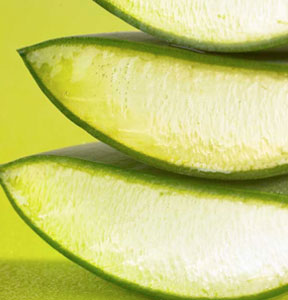
Aloe’s healing elements are found in the plant’s yellow-green gel, which oozes from its fleshy stalks. Loaded with more than 200 active components, including vitamins, minerals, amino acids, enzymes, polysaccharides, fatty acids and more, aloe is one of the few natural substances scientifically proven to heal the body. Among aloe’s scientifically proven abilities are the following:

Aloe penetrates tissue. Unlike water, aloe can be absorbed by the skin. In fact, it is absorbed deep into the skin’s layers. This is due to the presence of lignin, a substance similar to cellulose. This ability allows aloe to act as an excellent carrier for the other components of aloe vera, as well as other ingredients that are included in aloe-based skincare products.

Aloe acts as an anesthetic. Aloe has a high magnesium content and contains aspirin-like compounds. Therefore, it is commonly used to alleviate the pain of burns and wounds, including countless skin ailments.

Aloe has antimicrobial properties. Among the antimicrobial compounds found in aloe are saponin, which acts as an antisepsis, and barbaloin, which is effective against Mycobaterium, a family of bacteria known to cause serious diseases. A 1979 study by Heggers et al showed that aloe in concentrations greater than 60% is lethal against various organisms. Given that bacteria is a main cause of acne, aloe’s antimicrobial properties are beneficial in treatment of the condition.

Aloe is an anti-inflammatory. Aloe contains salicylic acid, a beta hydroxy acid known for its anti-inflammatory capabilities. Additionally, it contains sterols that inhibit acute inflammation, similar to cortisone, but without the side effects. Nearly all skin conditions stem from inflammation, making aloe an ideal remedy.

Aloe is proven to heal wounds. Scientific research has shown that several components in aloe are responsible for the substance’s excellent ability to regenerate cells. These include gibberellin, a growth hormone-like substance that increases protein synthesis and lectin, a protein that increases collagen activity and improves the collagen matrix. Thus, aloe may be utilized to heal conditions, such as acne or eczema, while improving the overall health of the skin.


backtotop
    

Optimizing the Benefits of Aloe in Skincare Products

Aloe is readily available in nearly every type of skincare product – from cleansers and serums to moisturizers and sunscreens. However, few, if any of these products deliver exceptional results. Why? Because of limitations in quality and concentration, as well as inappropriate formulations that fail to maximize the active ingredients present in aloe.

It’s a matter of concentration.

Many companies tout the use of aloe in their products but what they don’t want you to know is that aloe must be used in high concentrations to ensure its benefits will be realized. In order to achieve this, aloe must be used as the product’s base ingredient. As such, it will be the first ingredient listed on the back of the product. Chances are that, instead, you’ll find water listed in that primary role.


Water only dilutes the active ingredients in the product, which makes any aloe it does contain virtually worthless. Water-based products are essentially non-therapeutic. Conversely, aloe-based products are therapeutic by their very nature.

Given aloe’s ability to penetrate deep into the skin’s layers (unlike water, which cannot be absorbed), it is an excellent carrier for other effective ingredients. Therefore, beyond the need to have a high concentration in order to experience aloe’s benefits, a base of this therapeutic ingredient offers additional advantages.

Beyond quantity, there’s quality.

Like other cosmetic ingredients, aloe is available in a range of grades. In descending order, these include pharmaceutical, food, cosmetic, reagent and technical. In skincare products cosmetic-grade aloe is the most commonly utilized.

In addition to the numerous beneficial components present in aloe, the plant also contains active ingredients considered impurities because of their capacity to cause contact irritation or allergic reactions in some individuals. Given that a percentage of impurities are allowable in cosmetic-grades, per the U.S. Food and Drug Administration, cosmetic-grade aloe may actually be detrimental to some skin types. For this reason, it is necessary to select a product that utilizes pharmaceutical-grade aloe, the purest form available.

Pharmaceutical-grade is generally reserved for medical and pharmaceutical applications but some skincare companies utilize it to ensure optimal results from their products.


Whole leaf aloe is made by grinding both the interior and outer rind of the aloe leaf while inner fillet aloe is made by removing the outer rind of the leaf and harvesting only the interior of the stalk. Aloe gel made from whole leaf is less expensive and is subjected to more processing. Thus, it contains more undesirable materials. While whole leaf aloe does have a dedicated following, nearly all research conducted on aloe’s benefits was done using inner fillet. Therefore, inner fillet aloe has a proven scientific track record.


Harvesting and processing techniques matter.

Aloe’s active ingredients begin to break down and lose their effectiveness immediately after harvesting; a situation that is only compounded by inferior processing. When aloe leaves are crushed, an enzyme is activated that begins to kill off the mannose molecules in aloe, the element that is key to the plant’s healing abilities. In time, this enzyme will digest all of aloe’s beneficial polysaccharides as a termite digests wood.

To avoid this decomposition of benefits, aloe must be processed within four to six hours of harvesting. This ensures the harvested aloe retains its “bioactivity.” In other words, it maintains its therapeutic healing properties and will work synergistically with the body’s own healing mechanisms. Additionally, effective processing requires that aloe’s molecular structure be stabilized, standardized, freeze-dried and ground to a powder or created into a gel – all within that short window of opportunity.

So how can you ensure these guidelines have been properly followed in the aloe contained in your skincare product? The International Aloe Science Council (IASC), a non-profit trade organization dedicated to providing the world with the highest quality of aloe, is the governing body that certifies high quality aloe. By looking for the IASC seal (or purchasing products that utilize IASC certified aloe) you can rest assured that the aloe contained in a product meets only the most stringent quality standards.


backtotop


Lexli pledges the following with regard to the quality and concentration of aloe used in our products:

  • We use 100% pure, organic, pharmaceutical-grade aloe that is IASC certified.
  • We use only premium quality, inner-fillet aloe.
  • We use bioactive aloe that is properly processed and stabilized within four to six hours of harvesting.
  • We use aloe in high concentrations to ensure the therapeutic benefits of the plant are not lost to dilution or the presence of other ingredients.

Aloe is a potent healing agent with many outstanding benefits. However, these benefits may only be experienced if all of the above factors are present. Lexli was founded to be a source of affordable and effective aloe-based products. In fact, our core mission is to introduce professionals and consumers alike to the pure healing power of premium quality aloe vera.


backtotop
    

The Trouble with Water and Case for Aloe

Nearly all skincare brands formulate their products with a base of water. Not only is water abundant, it’s also inexpensive, making it an excellent base – from a manufacturer’s point of view. But what about the product end user’s perspective?


For years, skincare product marketing has led consumers have been led to believe (again, by skin care product marketing) that water based products benefit the skin and help to hydrate it. But the simple, undisputed fact is this &emdash; skin cannot absorb water. If it did, we wouldn’t be able to swim. While a small amount does get absorbed into the keratin layer (the cause of wrinkly skin after a bath), it actually does nothing to hydrate the skin.

Consider that the base ingredient in skincare products is tasked with delivering all the other included ingredients to the skin so the product may provide its intended benefit. But given that the skin cannot absorb water, these other ingredients are not allowed to penetrate either. Therefore, given the limitations of water as a base ingredient, the promises that the product delivers cannot be delivered either.

Thus, when inflammation is reduced, skin concerns can be effectively and quite successfully controlled.

For this reason, aloe is an excellent therapeutic base for skincare products. When administered in the appropriate concentrations of the highest quality, the results obtained are often extraordinary.


backtotop